Are There Any Vegetables to Be Careful of When Pureeing My Own Baby Food
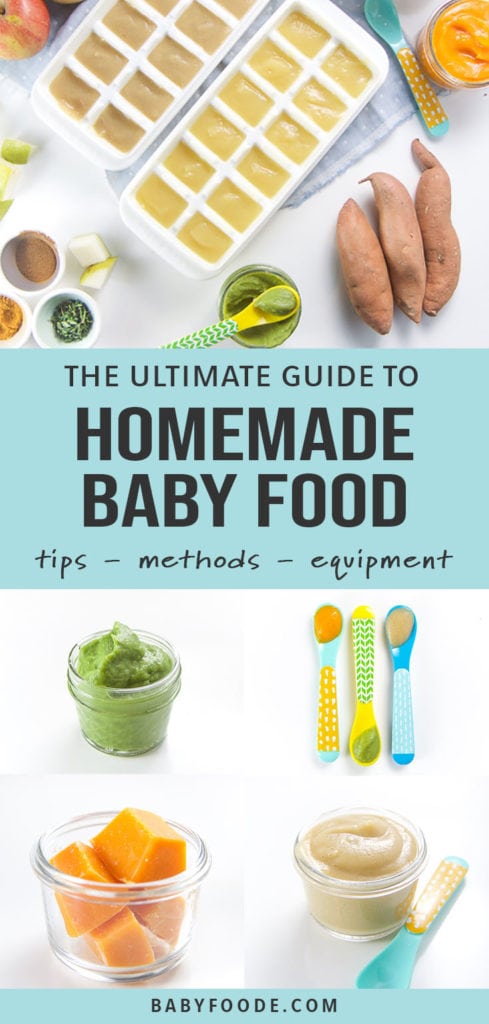
Here it is, the Ultimate Guide on How to Brand Your Own Baby Food! Everything you need to know to get started on making homemade baby purees is correct in this guide. Tips, tools, storage methods, recipe combinations, starter purees, introducing new foods — name it, and you'll find information technology here! This in-depth guide is perfect for babies ages iv-6+ months!
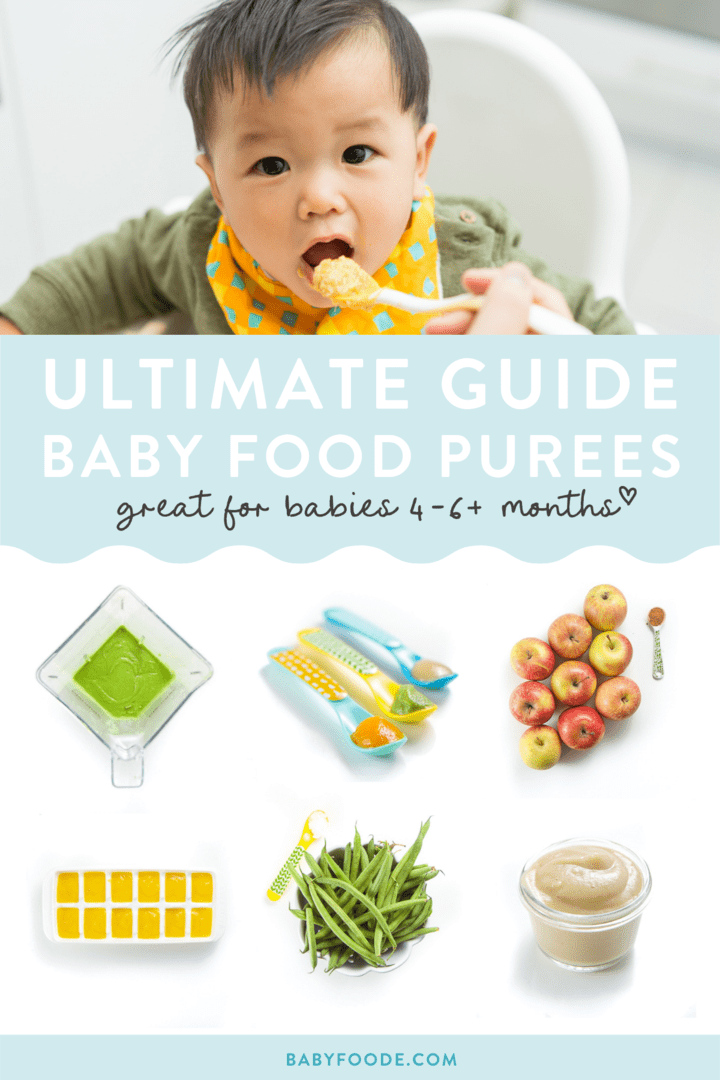
Medically reviewed and co-written by Jamie Johnson, Registered Dietitian Nutritionist (RDN), and Lauren Braaten, Pediatric Occupational Therapist (OT).
Purees for Baby
Are you wanting to brand your babe homemade baby nutrient purees but don't know where to commencement?
In this guide I'll share everything y'all need to know to begin, starting from the best cooking tools to have on hand and safe storage. I will as well share how to know when baby is ready for solids, how to introduce purees, the best first foods for baby, starter purees, and more! They're all ideal for babies at least 4 months old (stage one baby food). Y'all can as well check out my best-selling cookbook for even more than information and recipes!
In short, this comprehensive guide will teach you how to make and serve homemade babe food without stressing out about it.
That'due south the key here —don't stress out. Information technology'south supposed to be fun, and it'due south going to be! Hopefully, after going through this guide, y'all'll realize that making bootleg baby food is as like shooting fish in a barrel as pie. Plus, seeing your baby wanting to devour your appetizing homemade purees is a priceless moment that is worth the work.
Hither's a tip: Grab a cup of coffee (or glass of vino), and break this post down into smaller sections so you can assimilate it (pun intended) over time.
Every bit you lot start making your own infant food purees, you'll realize that this once daunting task can actually become 2nd nature to you. Don't panic, you lot've got this!
Guide on Baby Food Purees Video
Watch this video to detect out more than most how to freeze, shop and thaw your own purees!
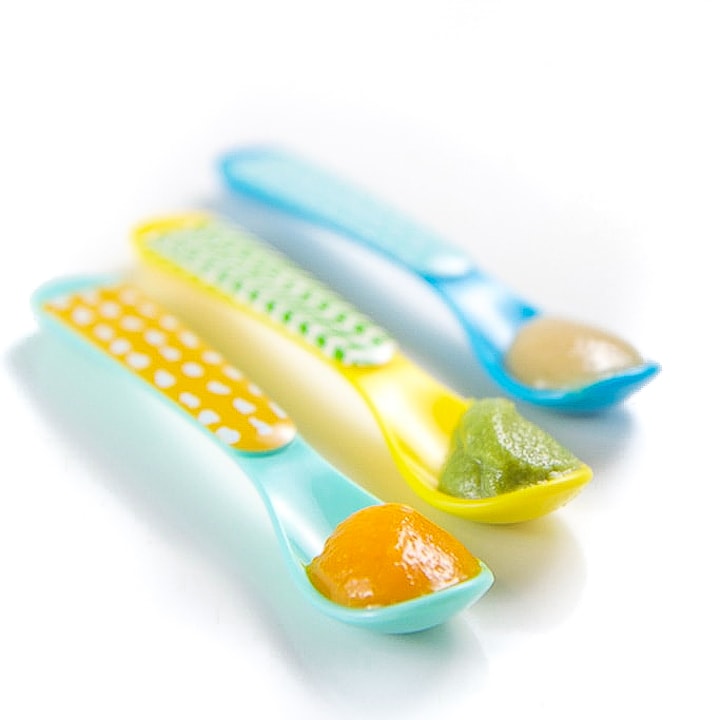
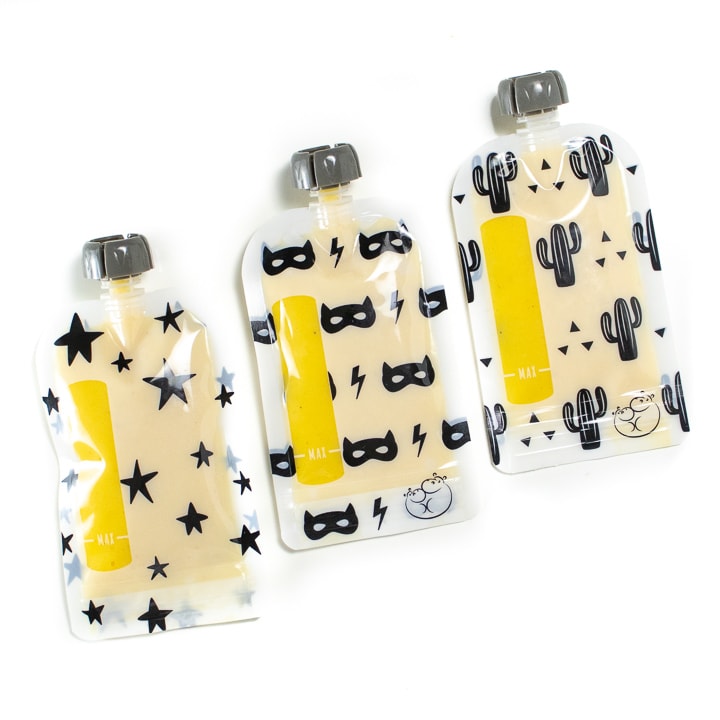
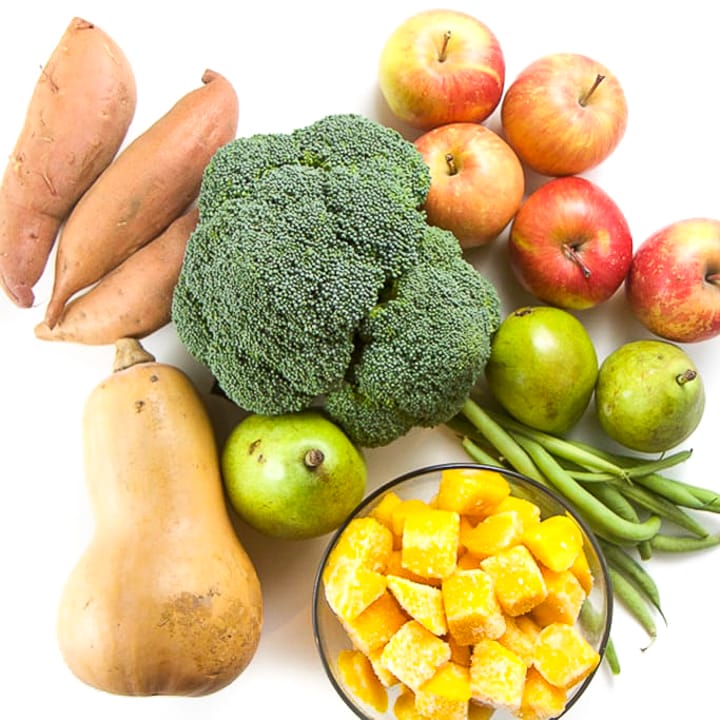
five Reasons to Make Your Own Baby Nutrient
Nowadays, it'south easy to buy food for your infant. Many brands at present tout that their infant food purees, pouches, and snack bars are organic. Given that you practise have a choice, why should you cook at habitation?
TASTE
Goose egg tastes better than a good for you, homemade meal, and that goes for baby purees likewise.
- Tastes Better – Nutrient e'er tastes meliorate using fresh, wholesome ingredients.
- Tastes Real – If you desire your baby to experience what a existent apple tree tastes similar, so brand a baby food puree using real apples. The industrial process of making store-bought babe food kills off almost of the flavors, nutrients, and aromas of the produce, making purees sense of taste banal and unnatural.
- Tastes Fresh – Virtually commercial baby nutrient purees are heated to extremely loftier temperatures to have upwards of iii-year shelf life. That means the food from the store is well-nigh likely older than your baby.
Don't get me incorrect — store-bought baby nutrient is convenient if y'all are in a pinch. But yous can't vanquish the taste of whatever homemade baby food.
TEXTURE
The ability to control the thickness of your infant'due south puree is an reward that will non only help you go through the picky-eating days but also help transition your baby from purees to solid food.
- Some babies prefer thinner purees, while other babies like thicker ones. When you make your own, you are in control of how thin or thick your baby's puree will be.
- Different textures are every bit new to your baby as the flavors themselves. So, varying a puree'south texture will non only give your baby a new eating experience but will as well excite their sense of taste buds.
NUTRITION
Bootleg baby food is undoubtedly healthier for your babe than whatever brand of store-bought food, whether jarred or in pouches. But the biggest diet win I feel you lot go is that you lot can tailor them to your child's needs someday.
- Is your infant feeling a little under the weather? Brand a puree high in vitamin C.
- Low on fe? Add some beef, spinach, or beans.
- Peradventure your baby is a piffling constipated. Making a puree with annihilation that starts with a "P" — pears, prunes, peas, peaches — will soon get your little ane back on their adorable feet.
QUALITY Command
Since you're the one who buys the ingredients and handles, preps, and cooks the purees, you tin rest assured that you know exactly what's going into all of your baby'south food.
What you brand is what your babies get! There are no fillers, thickeners, suspicious ingredients with names y'all tin't pronounce, shelf stabilizers, or unnecessary water. But healthy, flavorful homemade baby food that y'all can also enjoy!
COST SAVINGS
Lastly, this might come as a surprise, but making your own baby food with all organic ingredients is more than 50 percent cheaper than ownership their shop-bought counterpart!
Depending on how much your babe eats, bootleg baby purees can salve you lot some serious money.
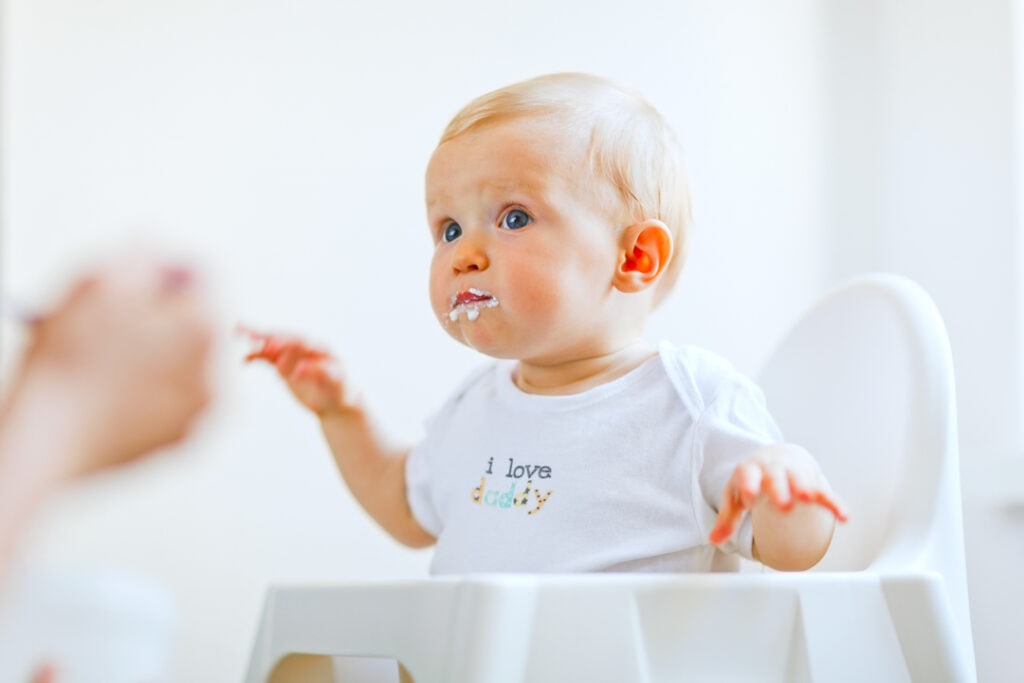
What is Traditional Weaning
Traditional weaning (besides sometimes called "spoon-feeding") involves introducing food to your babe via puree form first and and then gradually progressing the texture and types of foods over time. Since food is pureed with traditional weaning, the parent typically needs to spoon-feed their baby. Initial foods offered with this approach typically include sparse, smooth purees, such as fruits, vegetables, oatmeal or rice cereal. Textures gradually progress to thicker purees, then mashed or chopped foods, and eventually soft finger foods, such equally cooked vegetable pieces, toast, pasta, and meats.
Benefits of Traditional Weaning/Spoon Feeding
- Infant learns how to swallow safely first, then works on chewing skills afterward. Purees tin be very helpful for didactics swallowing, as they assistance intrinsic natural language muscles develop, preparing your baby to chew and swallow more efficiently. It's likewise less common to gag or choke on purees, which may help some babies feel more comfortable when starting the feeding process.
- You know how much your infant has eaten.Whether using shop-bought or homemade purees, yous'll be able to get a good estimate on how much your baby consumed.
- Babe can get a lot of flavor from the start. Who says purees have to be boring and bland? Specially if you lot make homemade purees, at that place are some pretty tasty flavor combinations that you can offering baby equally some of their beginning foods.
- Less Mess (well, maybe). Although letting baby affect and explore foods is an important office of the process, if you're feeling hesitant on just how messy things are going to get initially, starting with spoon-feeding purees might help you lot ease into the procedure.
Challenges of Traditoinal Weaning/Spoon Feeding
- Preparing lots of different purees can be time consuming.In addition to making other meals for yourself and the residue of the family, it might feel challenging to make separate meals just for your baby. Although with homemade purees, you volition often make a large plenty batch so that y'all'll take several weeks' worth of food.
- Spoon feeding baby tin can make information technology tough to feed yourself during a family manner meal.Sitting and eating when infant eats is possible, but y'all will likely have many interruptions every bit you pause to spoon-feed infant throughout the meal.
- Babe won't get as much opportunity to engage in sensory exploration.Unless yous progress to giving infant their own bowl or spreading purees on the tray and encouraging baby to sense of taste the nutrient off their fingers, they won't get as much opportunity to feel the puree on their hands, fingers, and face.
- Feeding baby past signs of fullness.Reading infant's cues is important no matter what approach you're using, but there can exist a tendency to proceed to feed baby past signs of fullness when spoon-feeding and sneak in "just one more seize with teeth" from that almost empty container.
- Getting "stuck" in a comfortable zone.Once baby seems to have mastered taking purees from a spoon, information technology tin can get tempting to stick with what you know. Simply infant tin get too comfortable with the shine texture of purees if non encouraged to progress to other textures. This may atomic number 82 to difficulties managing these textures later on on in life.
When is Baby Ready for Solids
Whether y'all decide to get with traditional weaning (purees), infant-led weaning or a combination of both,expect for these readiness signs in your baby:
- Around 6 months of age
- Sitting with minimal aid
- Expert command of their head and trunk
- Bringing hands and toys to their mouth
- Appears interested in food, peradventure by reaching for or leaning forward towards food
Earlier you offset weaning your baby, you should consult with your pediatrician to make sure your child is developmentally set up.
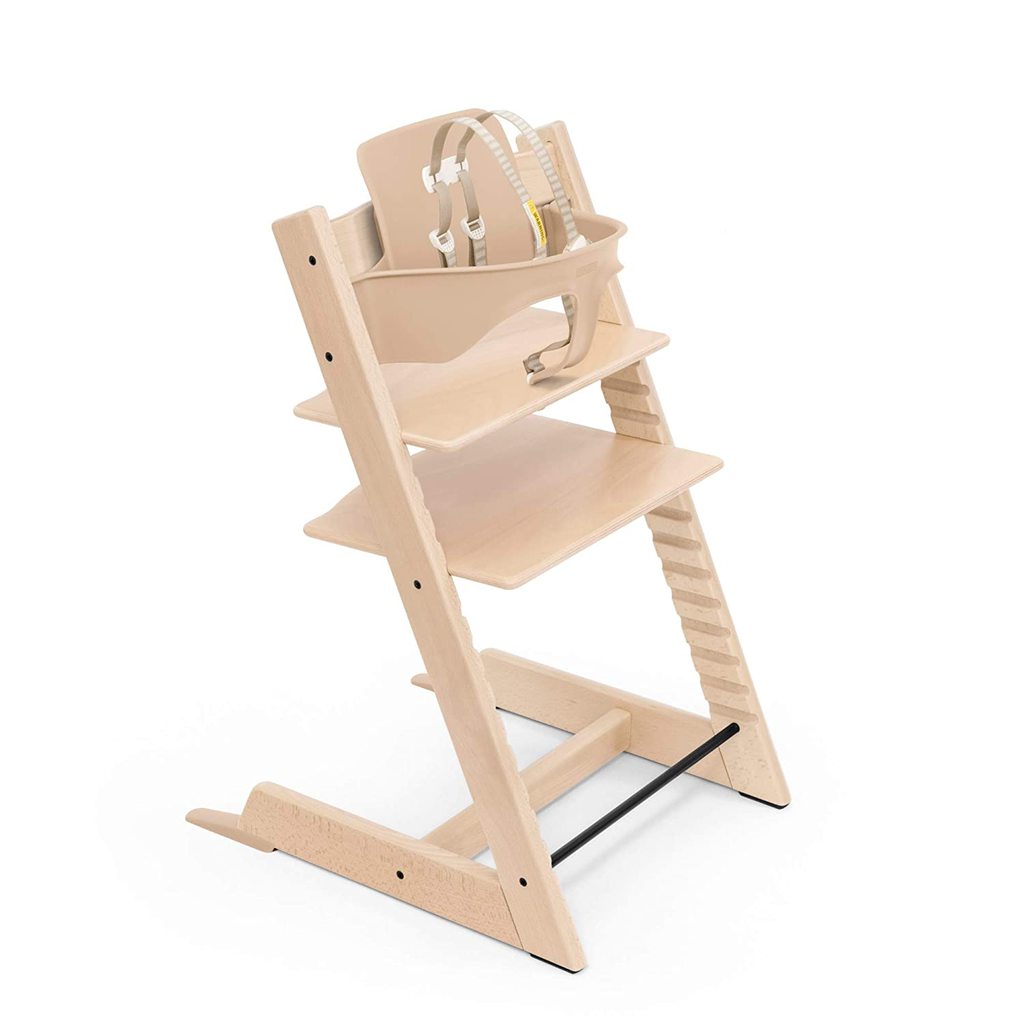
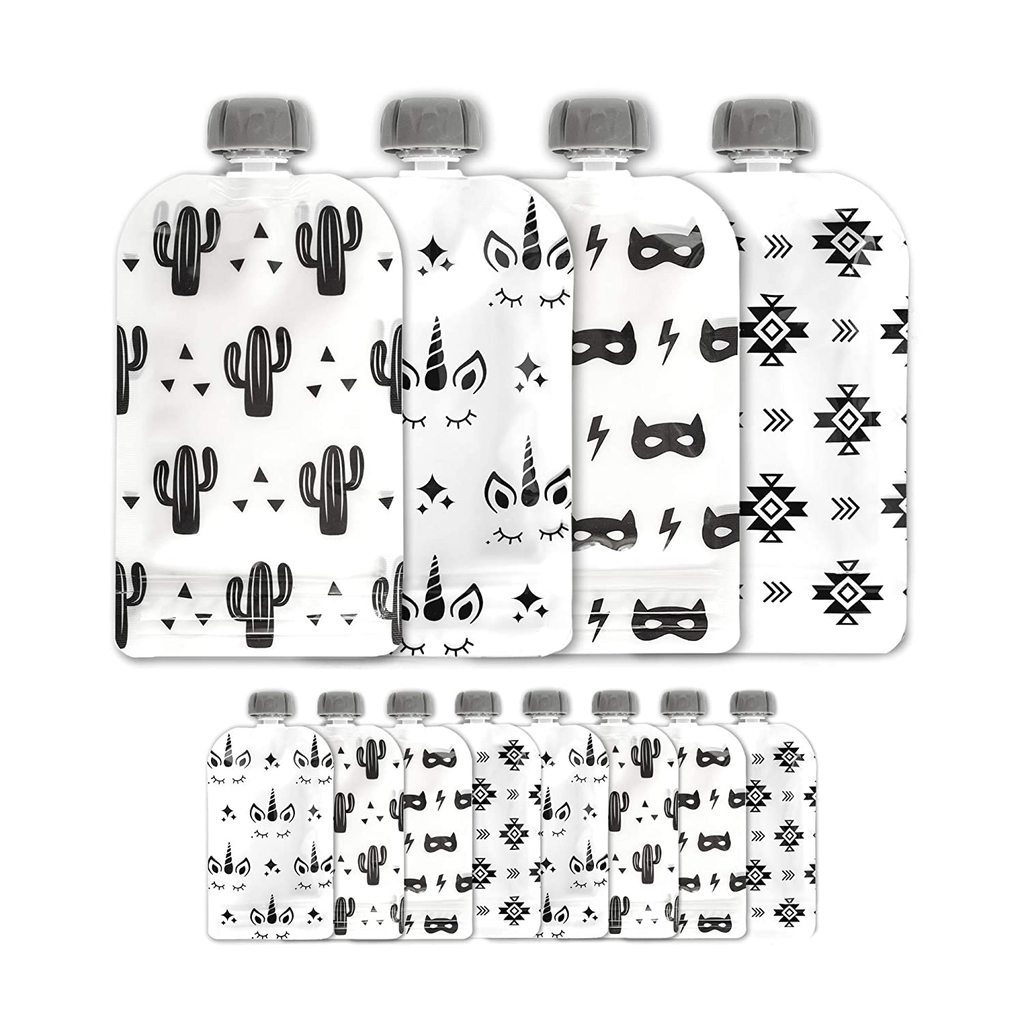
Fortunately, most of the tools you need to make homemade baby food tin already be plant in your kitchen. Score!
Tools Needed
- blender or food processor
- baking sheet
- saucepans
- knives
- veggie peeler
- spatula
- freezer tray
- storage containers for fridge
- stasher handbag
- reusable pouches
- baby food maker
Infant Feeding Essentials
- highchair
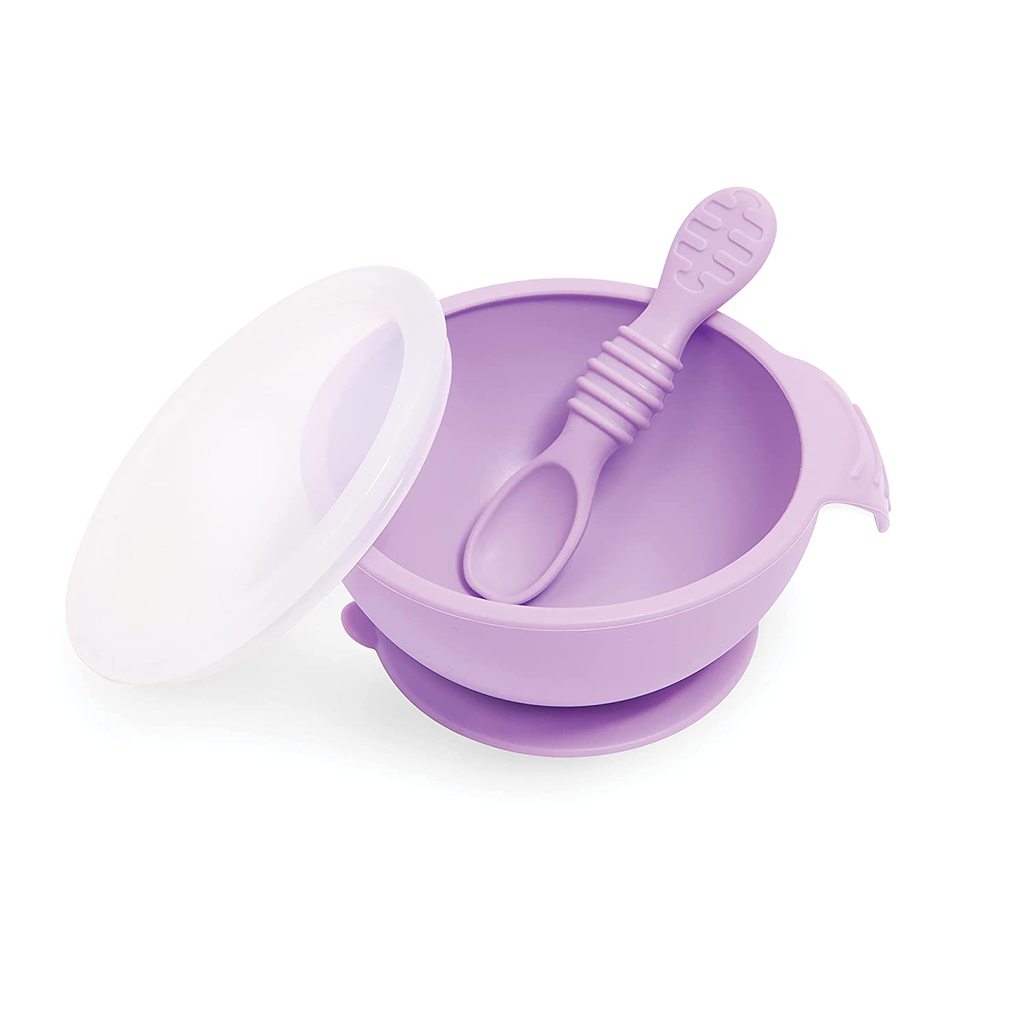
- suction bowl or infant bowl
- baby spoon
- open lid cup
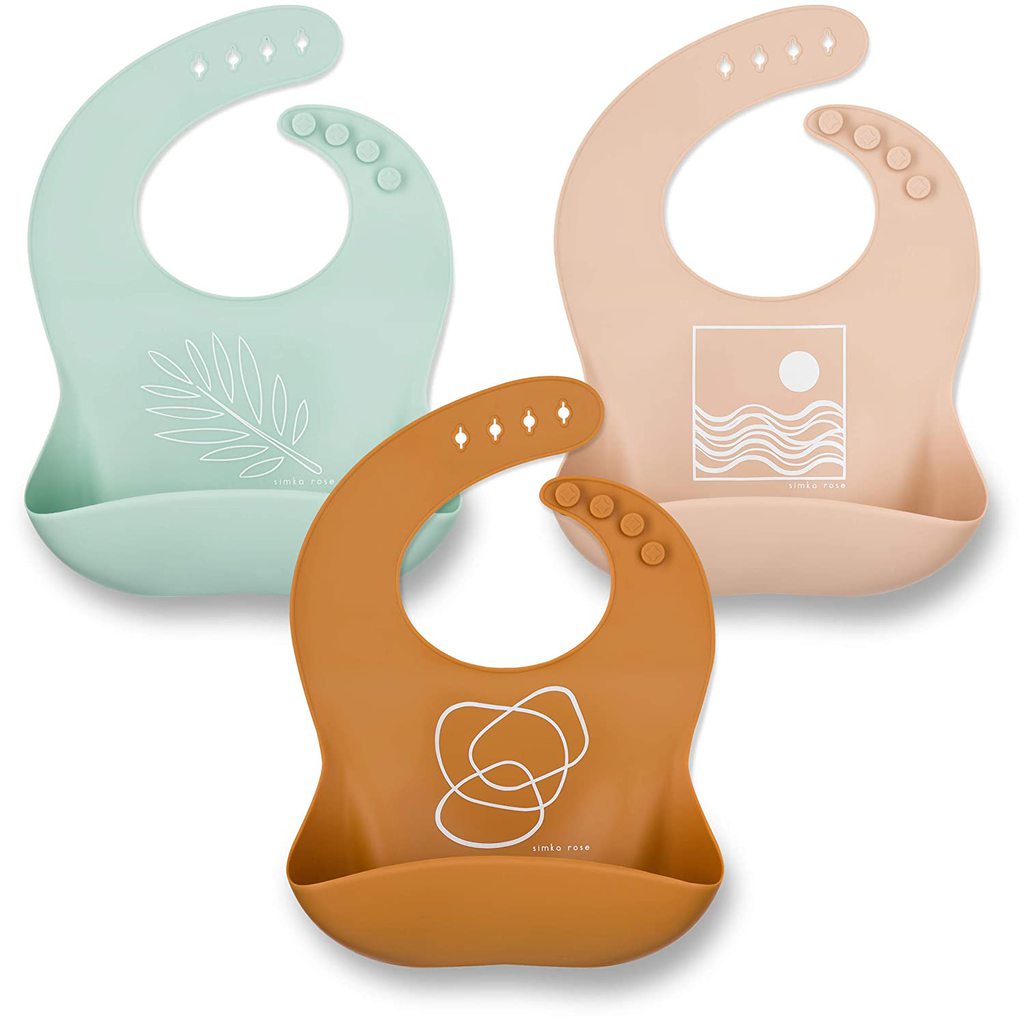
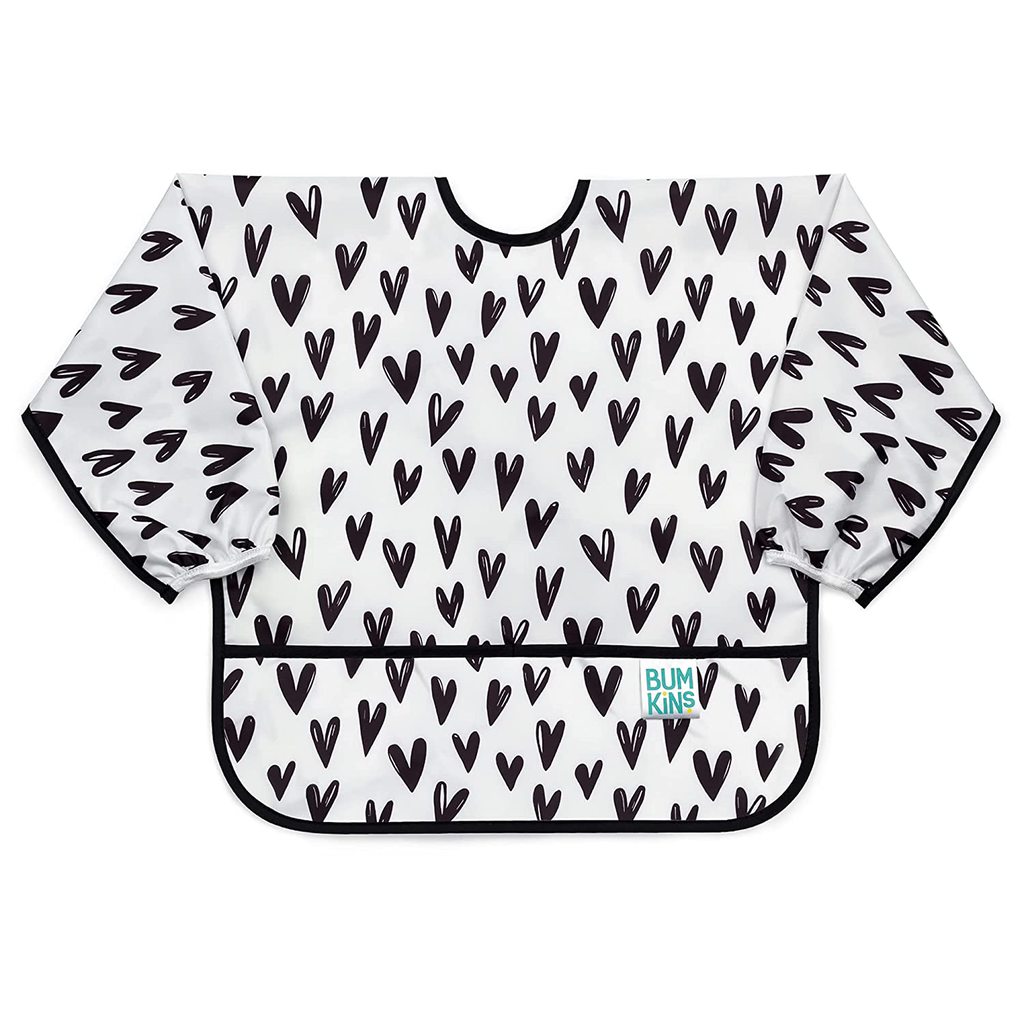
- bib with catch pocket
- sleeved bib
- splat mat to cover the floor
Learning Resources: looking for the best high chair, cups or spoons for your infant? So we've got you covered! Here you will find How to Find the Best Loftier Chair for Infant, an easy guide on Best First Open Cups for Babe (plus 4 tips when introducing a loving cup) as well as 3 Tips on How To Spoon Feed Baby (plus – our favorite spoons for purees or BLW).
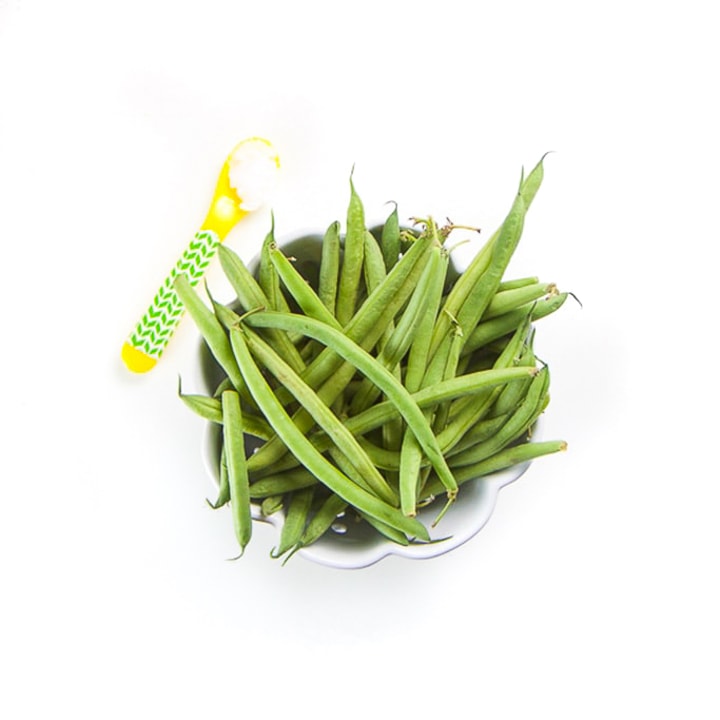
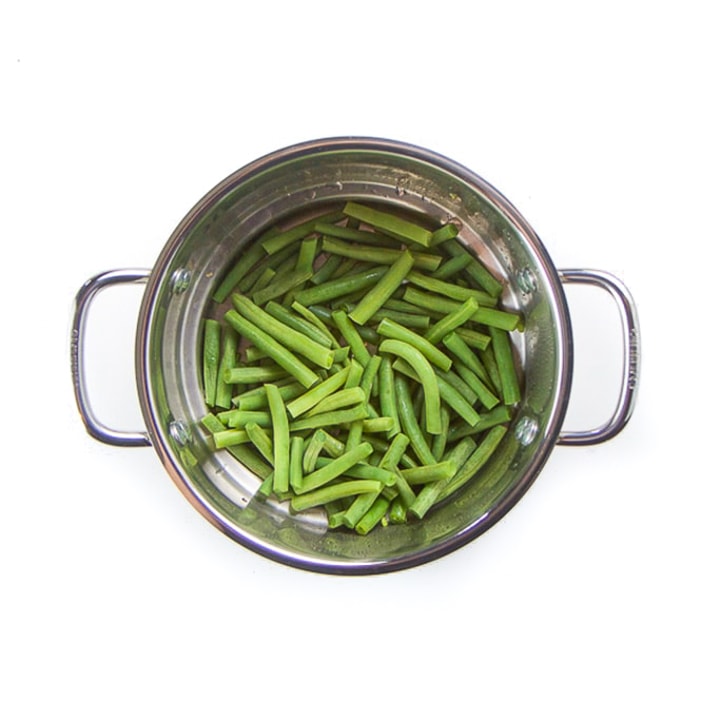
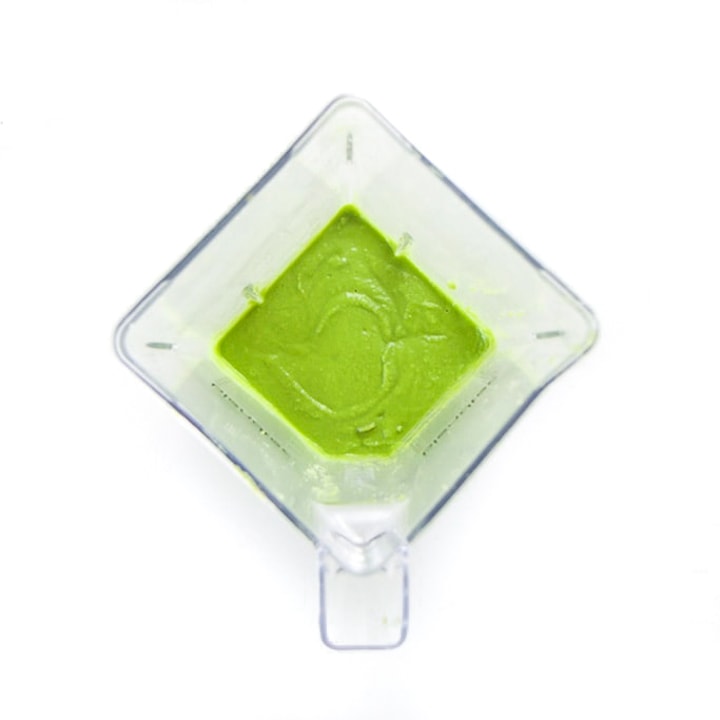
How to Brand Baby Food Purees
All of the infant food recipes on my blog and in my cookbooks are designed to enhance the natural taste of the fruits and veggies while keeping equally many nutrients intact as possible. In other words, the goal is to make a puree that'southward both good for you and delectable.
In that location are several means you can melt baby nutrient purees, simply the main techniques I employ are:
- Steaming
- Roasting
- Simmering
- Raw
Keep in mind, that equally long equally the produce is cooked until soft, that in that location isn't a right or wrong way to melt it for baby food.
If a recipe for broccoli calls for steaming but y'all want to roast information technology because you lot volition already be roasting some broccoli for yourself for dinner, then become alee and roast the broccoli for your baby's puree. Play around and have some fun with it!
Calculation Spices to Baby Purees
Information technology's encouraged that you lot can serve your baby a bootleg puree with a compression of spices or herbs from the very first seize with teeth.
Benefits of Spices
- boost and compliment any fruit or vegetable puree
- augment baby'due south emerging palate
- add more flavor and depth into their foods
- decrease picky eating in the years to come up
- accept medicinal backdrop in them — they can help with digestive bug, boost encephalon functions, repair musculus tissues, and and so on.
While each puree recipe on this site has a selection of spices or herbs that complement the flavors of the fruit or vegetable in the puree, it's up to y'all if you lot desire to add them. Yous exercise you! Either way, the puree recipes on this site volition be delicious.
Superlative Spices to Add to Baby's Puree
- Cinnamon
- Cloves
- Nutmeg
- Basil
- Mint
- Parsley
- Mild Curry Powder
- Fresh Lemon Juice
- Garlic
- Rosemary

How To Blend Baby Food
Pureeing homemade baby food is a very straightforward outcome. Notwithstanding, it tin can take some practice to become the smoothest, creamiest puree for your baby.
Pace-by-Footstep Instructions
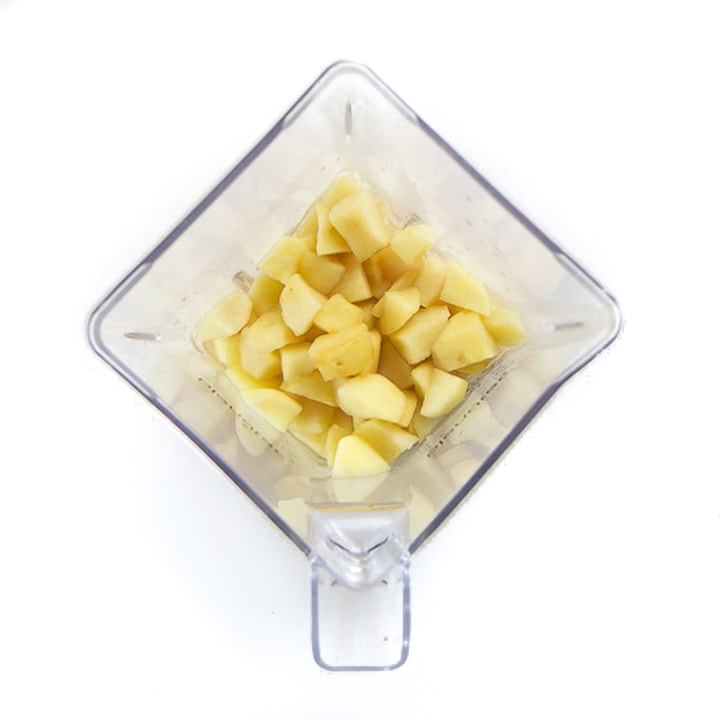
- Place Produce In Blender: identify cooked produce into a blender or food processor.
- Start Machine: turn the auto starting on low and increasing until y'all reach the highest setting.
- Add Liquids: add together liquids (water, fresh chest milk or formula) in small increments if needed to aid smooth out the puree. Root veggies may been upwards to a cup of liquid while fruits may not need any. Add in 1/4 cup of liquids at a time to make certain not to add too much liquids.
- Blend: it ordinarily takes 1-2 mintues to fully blend a puree for baby. If you are getting a chunky puree, add in a little scrap more water and keep blending.
Note on Blending: you will e'er get a smoother puree when you apply a blender over a food processor. Most babies volition not discover a difference betwixt the texture of baby food fabricated in a blender versus a nutrient processor but if your babe is having trouble with the texture of a puree fabricated in a food processor, you may want to try using a blender.
Tips for getting the Smoothest Baby Purees
- Requite Information technology Time: Requite your blender or food processor some time to work its magic. It takes i-ii minutes of blending for each puree to get the smoothest puree. Just information technology may have longer if you accept an older blender model or you lot are using a food processor.
- Add Liquids: You may accept to add together extra liquids like water, fresh breast milk, or formula into the blender or food processor in society to become the blender really going. Difficult root vegetables like carrots, sugariness potatoes, beets, etc., oft accept at to the lowest degree 1-2 cups of liquids because they do non take high h2o content. I recommend calculation liquid into the blender in i/four cup increments or smaller so y'all don't become a runny puree.
- Cyclone Effect: You will know you have the right amount of liquid and are at the right speed when you get the whirlwind effect. This is when all the ingredients are completely circling the blending without any interference.
- Scrape Down Sides: While blending, make sure to scrape the sides with a spatula to get all the produce and spices incorporated into the puree.
- Blender vs. Food Processor: A high-speed blender volition give you the smoothest puree. A food processor volition too work just the issue is a slightly thicker puree. The upside of the food processor is that you don't have to add as much liquid to the puree.
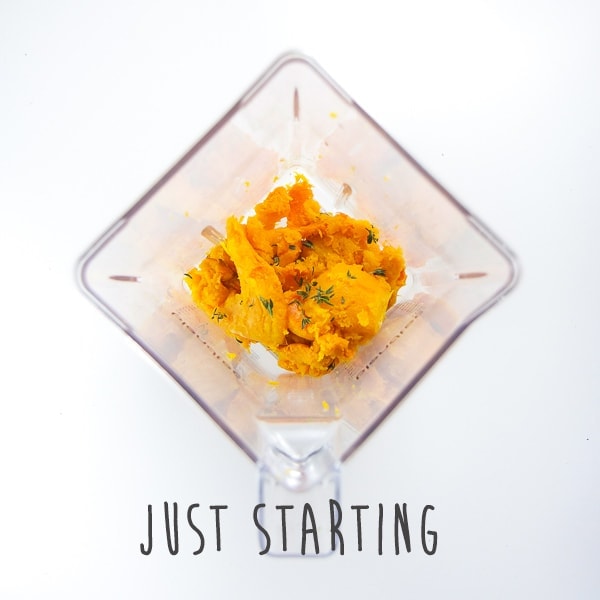
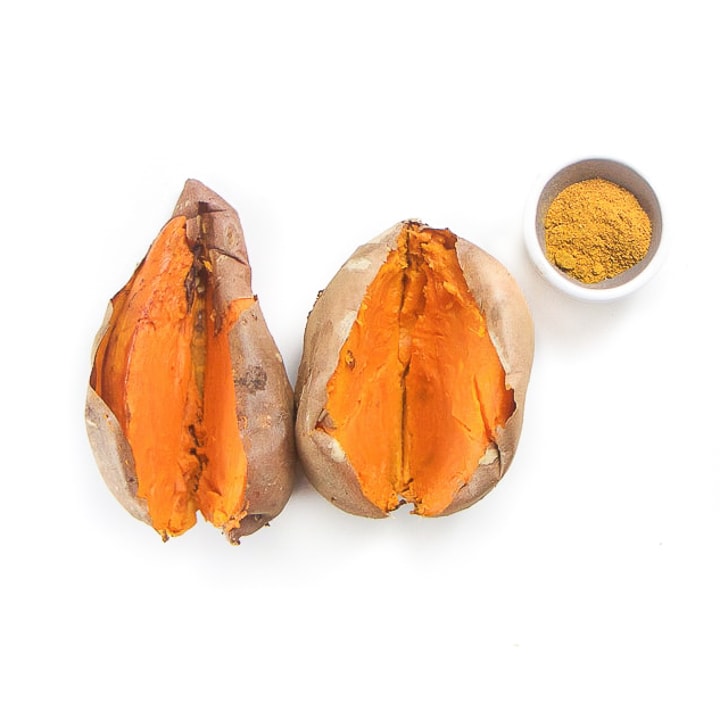
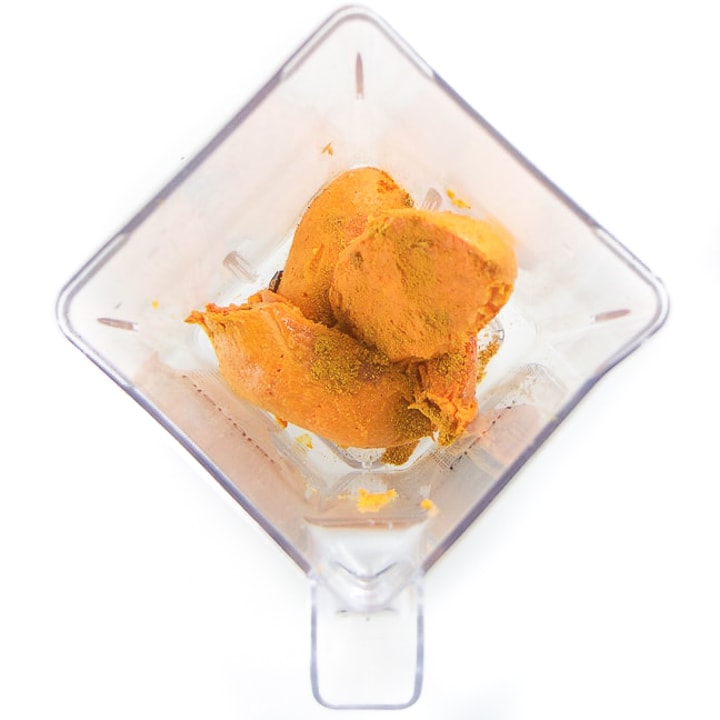
Just Starting: Roasted sweet tater and 1/2 cup of h2o.
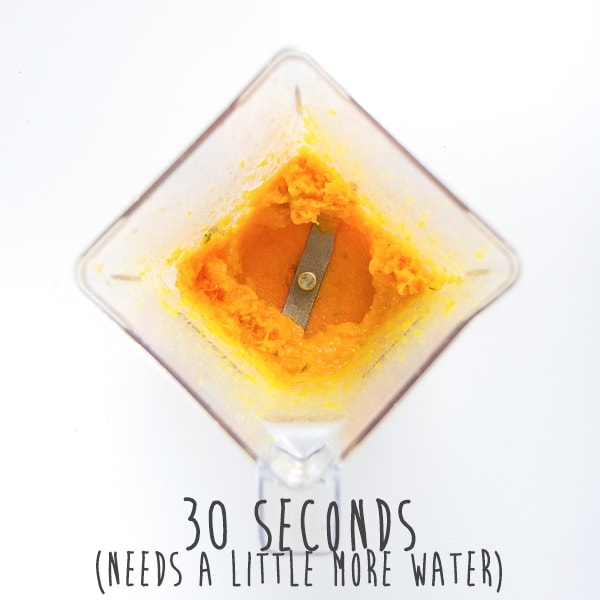
30 Seconds: Scraped downwards the sides and added 1/4 cup more of h2o.
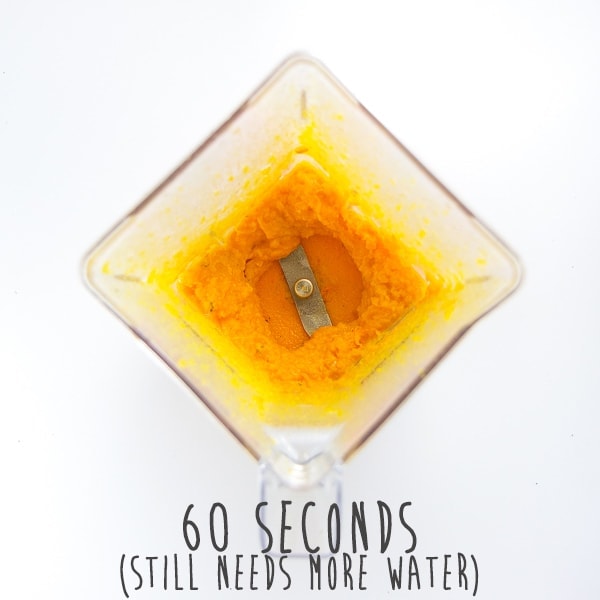
60 Seconds: Scraped down the sides and added 1/iv cup more of water.
90 Seconds: Added two tablespoons of water, and information technology was perfect. The puree was clearly running through the blender and the puree was getting super polish.
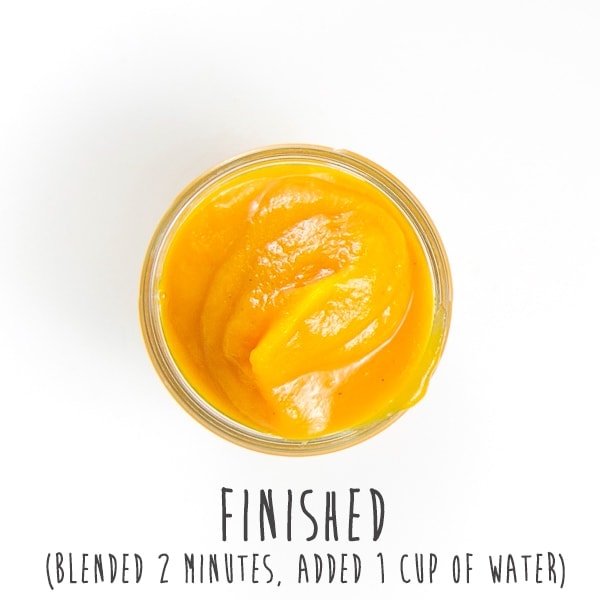
Finished: A smooth puree for the win!
Encounter the video in this post to become a stride-by-step wait at how to alloy baby food.
How to Freeze, Store & Thaw Infant Purees
Your freezer is about to become your new best friend, allowing you to keep several weeks' worth of babe purees at the fix.
How to Freeze Baby Food
Whenever y'all make a puree, put several ounces in the refrigerator for your picayune one to relish that calendar week, then freeze the rest of the batch for your babe to eat at a afterward date. Delight make sure you get it in the puree into the fridge or freezer inside 1 60 minutes of cooking to prevent bacteria growth.
- Make a puree.
- Permit it cool slightly.
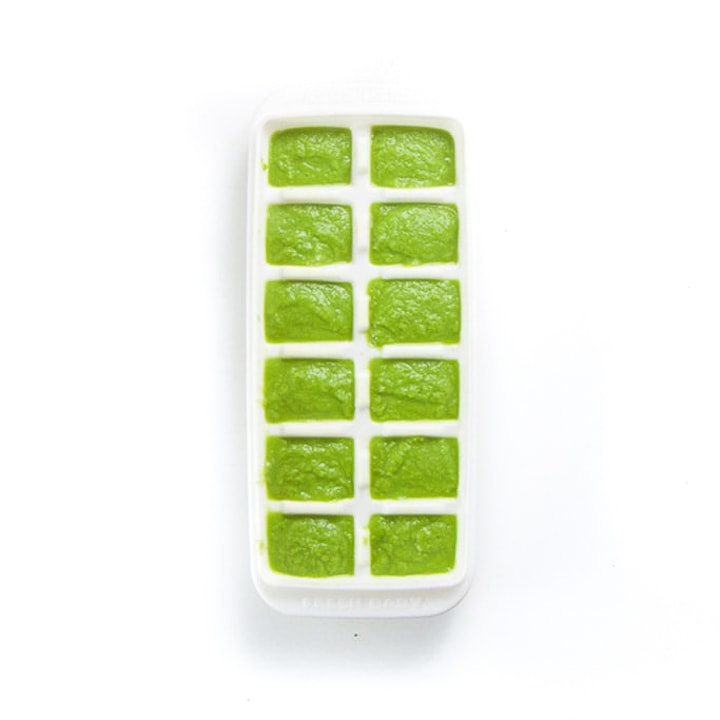
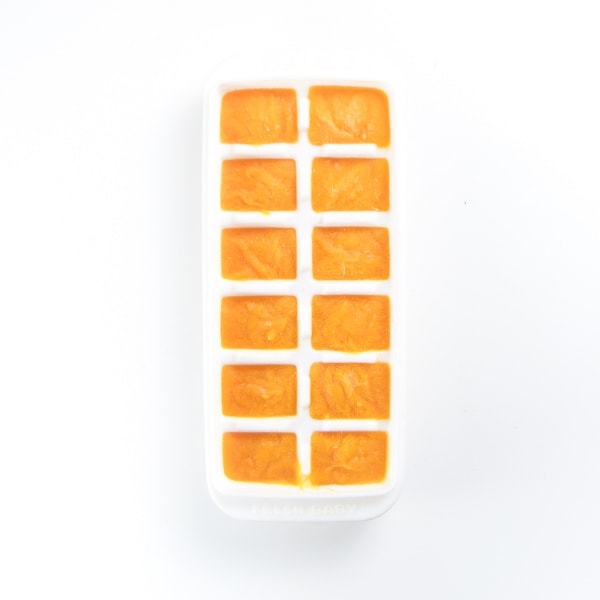
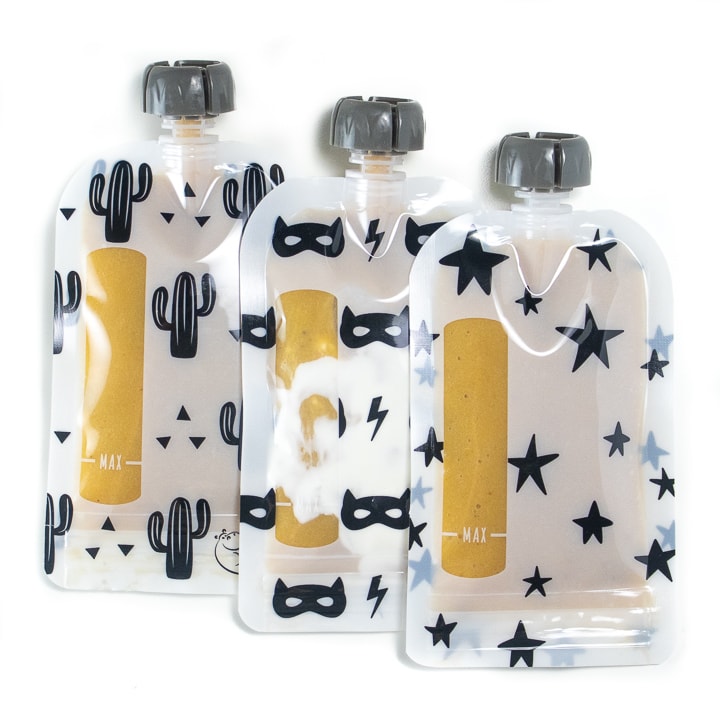
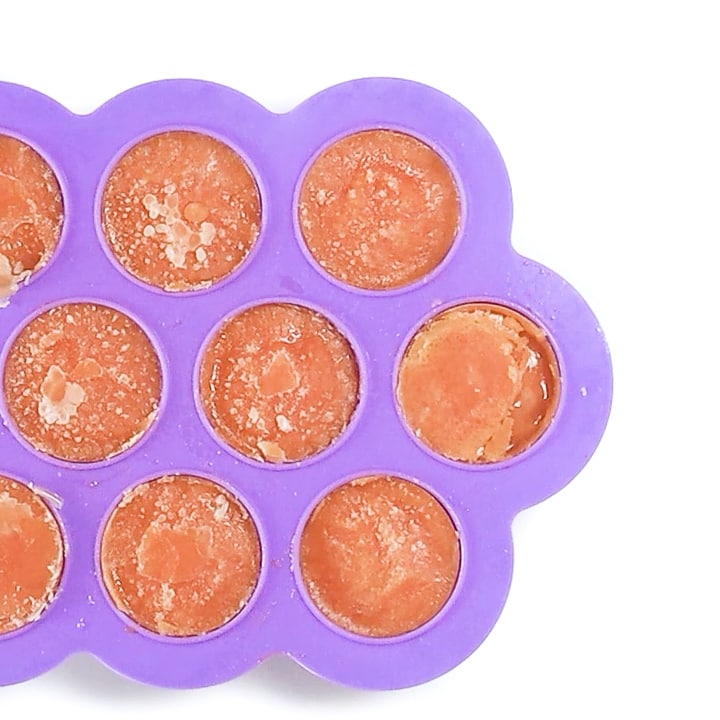
- Transfer the puree to freezer trays or freezer jars.
- Encompass the freezer trays with a lid or plastic wrap.
- Characterization with appointment and name of puree.
- Identify the tray in the freezer.
- Let it freeze for at least 5 hours.
- Take the tray out of the freezer.
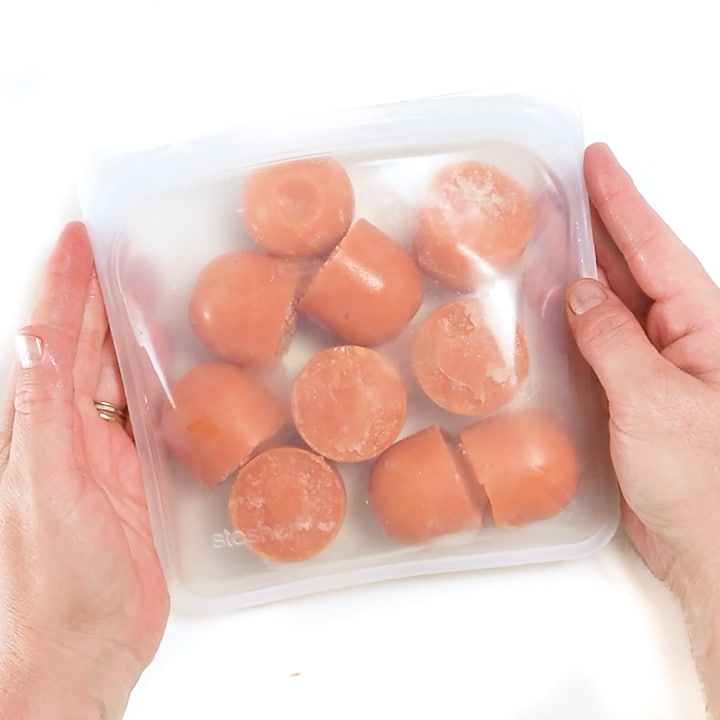
- Fissure the purees out of the trays.
- Place the frozen purees into nix-lock baggies or stasher bags.
How to Shop Babe Food
Purees can be stored for up to four days in an airtight container in the fridge or 4 months in the freezer.
How to Thaw Baby Food
Thawing may seem like a no-brainer, but information technology never hurts to know your options. There are three different ways to thaw purees.
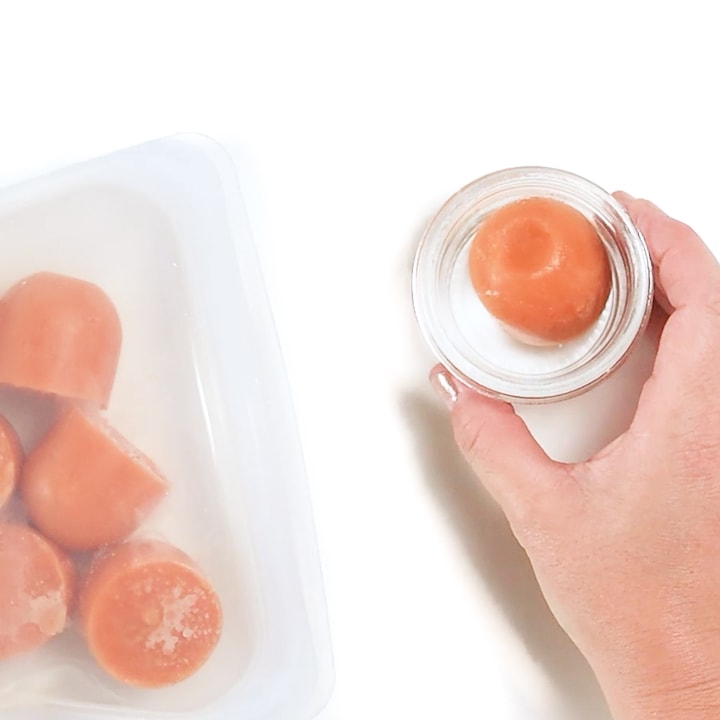
Microwave
- Have the frozen puree cubes that you desire to serve out of your freezer.
- Place them in a glass microwave-condom container.
- Microwave in 20-second increments, stirring every fourth dimension.
- The puree is ready when it is just warm to your touch.
- Catch two clean spoons, ane for yous and one for your baby, and exam your puree before serving.
Heating Tip: To foreclose the microwave from unevenly heating the puree, which tin can leave it with common cold and really hot spots and can fire your baby's mouth, make certain you stir between each interval and taste test it before serving to your infant.
Refrigerator
This 1 takes the longest fourth dimension, but it is an fantabulous alternative to using a microwave.
- Take the frozen puree cubes you want to serve out of your freezer.
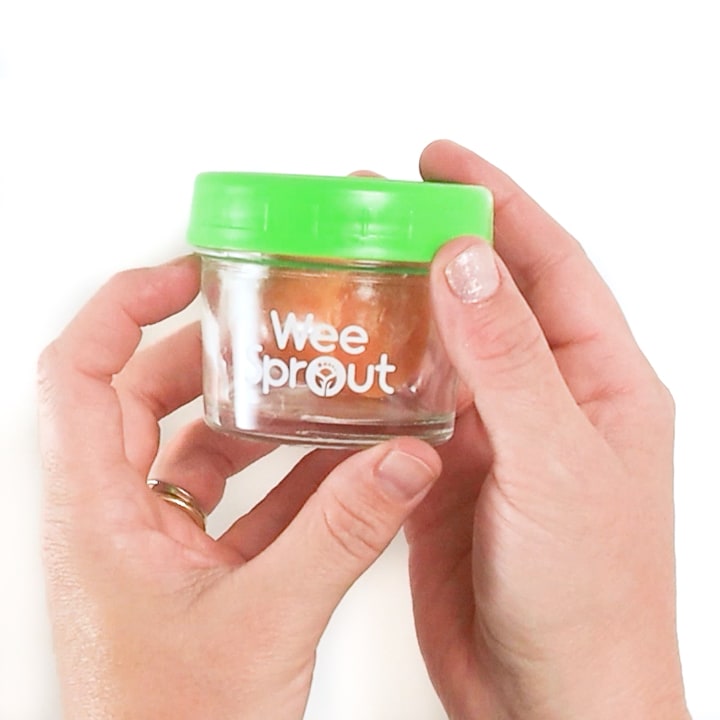
- Place the cubes in an air-tight glass container.
- Place the container in the fridge and let the cubes thaw for viii to 12 hours, usually overnight.
- Do not exit the puree in the container to thaw on the counter or anywhere out of the fridge, every bit leaner will start to grow at a rapid rate — which is definitely not recommended.
- Annotation that the puree will be cold but thawed. So if your baby likes their puree warmed, yous'll have to finish the chore using the microwave or stovetop method.
Stovetop
- In a small saucepan, add the frozen puree cubes you want to serve to your babe.
- Over medium-low heat, gently cook the puree until warm, stirring occasionally.
Thawing Tip: Some infants like their puree cold, warm, or actually warm, and some will consume it no matter the temperature. You will become to know your baby's personal preferences as the two of you bail over food.
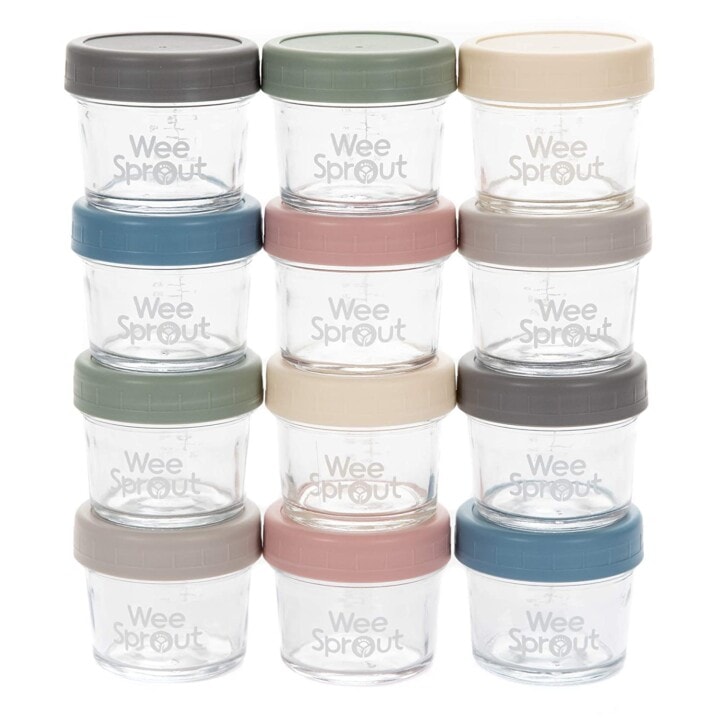
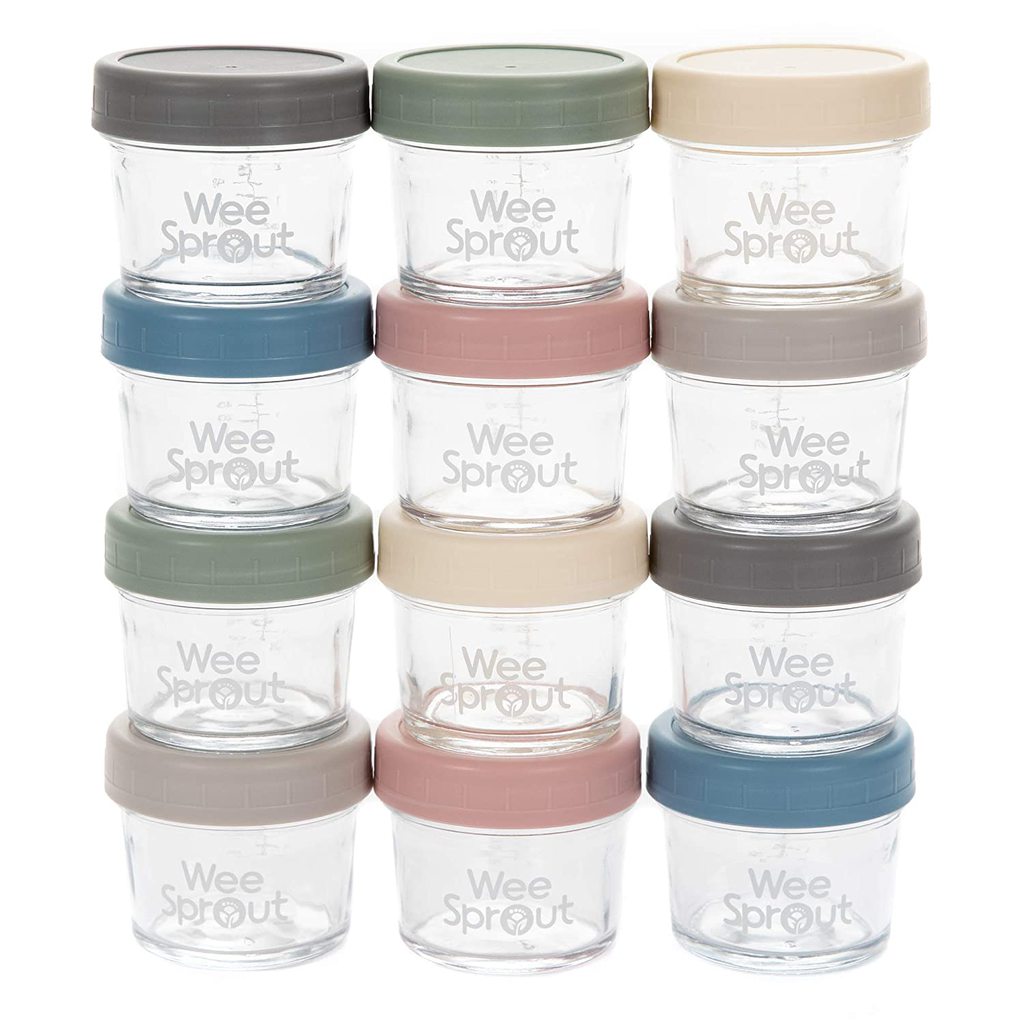
WeeSprout Glass Baby Food Storage Jars
These 4oz containers with lids let y'all to prepare the perfect amount of nutrient for your little ones. No more nutrient waste material! Made with food-class drinking glass and a plastic lid. Microwave, freezer, and dishwasher-friendly!
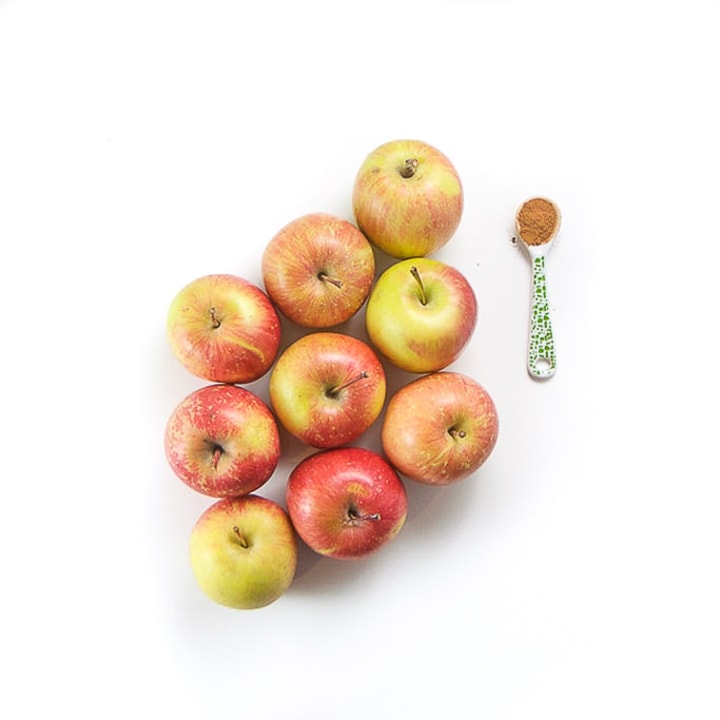
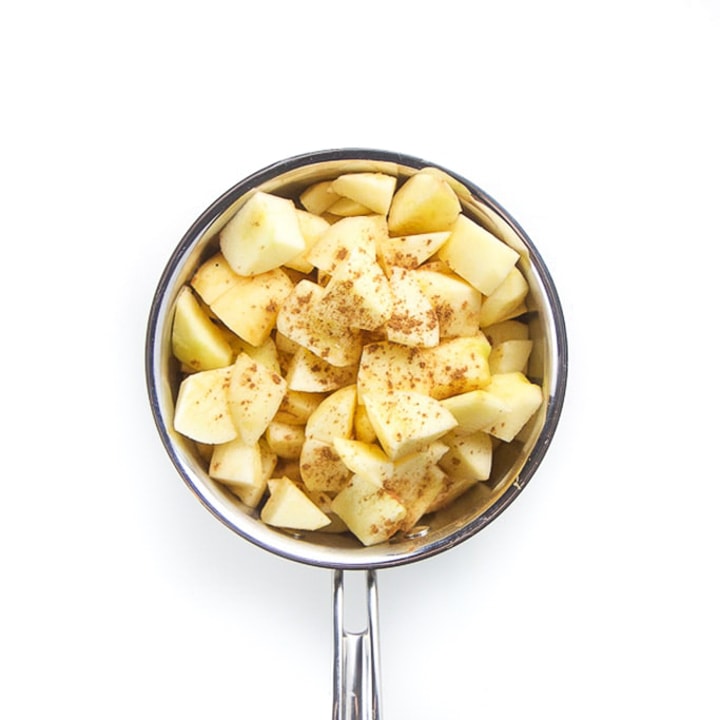
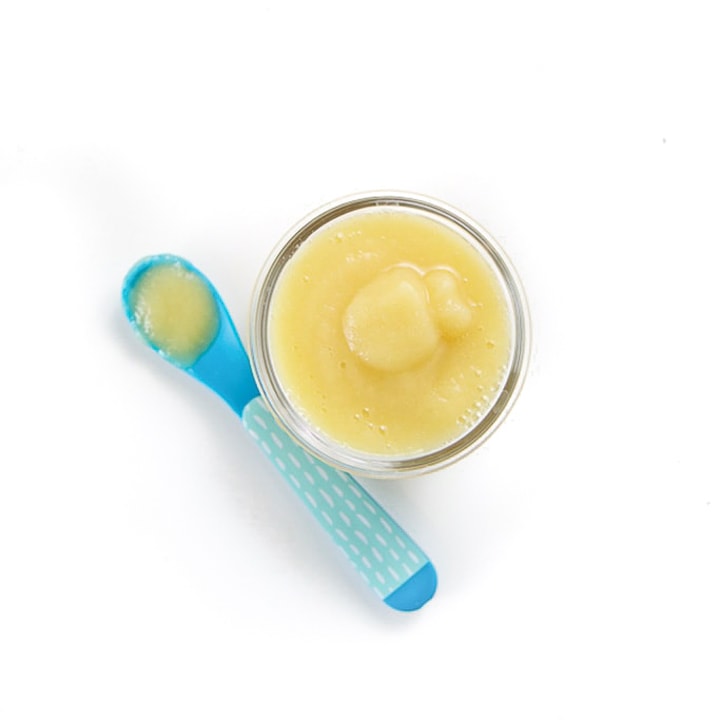
How to Introduce Purees
High chair? Check. Bib? Check. Fully charged prison cell phone? Check.
With this holy trinity of baby-feeding accouterment, yous're fix for that first feed.
The faces, oh, the faces your baby is about to make! Out of all the firsts, feeding is the nigh fun — and the messiest. So grab a few wipes, double-check that your phone has enough storage for dozens of photos and videos, and allow'southward get started!
Before you begin, make sure your baby has a little bit of breast milk or formula in their belly, about one-half of what you'd normally give in a regular feeding.
Not as well total. Not as well hungry. Just right.
The Principles
This is not going to be a clean and simple process. Your infant may eat food one day, decline it the next, and paint their face with it the side by side. Information technology'southward all okay. Playing with food is a expert thing; it is simply a style for babies to explore, learn, smell, and gustation the world around them. And so take those wipes close past, and remember:
- Outset Slowly – Two teaspoons once a day is enough food for babies for the offset couple of meals. Their bodies need time to adjust and digest new food. If they are still acting hungry, give them some more breast milk or formula.
- Let the Babe Decide – Your little 1 should determine how fast or slow they want to eat.
- All Spoons on Deck – Accept more than one spoon ready. Your infant volition surely snatch one out of your hands to play with, which is a-okay.
- Take Fun – Smile at your baby throughout the experience, and try to relax. The more fun y'all accept, the greater the likelihood your baby will enjoy information technology, likewise (even if they barely consume or don't eat at all).
- Build Upwardly – After a couple of days, build upwards the quantity of nutrient you offering one tablespoon at a time.
The Platonic
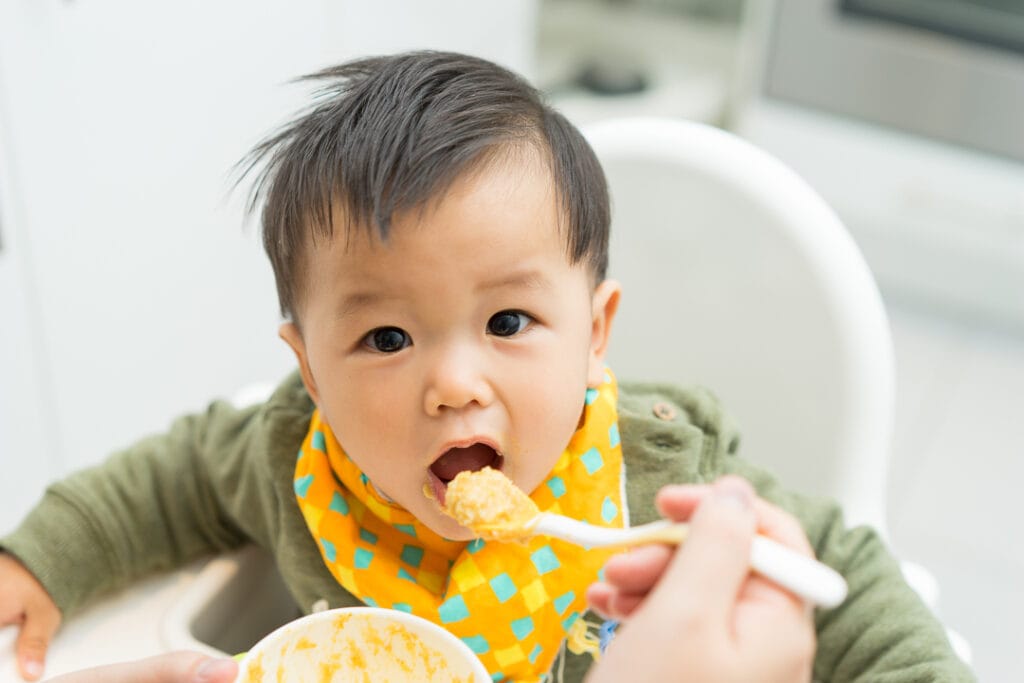
Are you ready to beginning the feeding? Select a puree you've already made. Identify just one or two teaspoons of it into its own bowl and slightly warm this small amount. You can choose whether to gently spoon it into your babe's mouth or hand the spoon over to them to attempt self-feeding. If your infant tries to grab the spoon from yous and gets it into their rima oris past themselves, whoa — you've got success on your hands. If the experience is a bit milder, and they allow you spoon some puree into their mouth, enjoy it. This is a winning experience, as well.
The Likely
Some babies will simply not open their mouths. Some babies volition have i bite, clamp their mouths, and plow away. If (and when) any of this happens, don't strength the spoon into their mouth, and don't stress out. Here are a couple of things to try:
- Put a scrap of the puree at the end of your finger and meet if your infant will suck it off. This is an unintimidating way to begin, particularly equally spoons can be scary for piffling ones.
- Pour a tablespoon of puree onto the high chair tray, and allow your baby to play with it if they want. This is a less micromanaging approach to letting the babe explore new nutrient. As babies love to put everything in their mouths, odds are at least some will get in (or nigh) it.
- If your babe has no interest in these options, end the feeding. Dispose of the ane or ii teaspoons you warmed. Put the remaining, unheated puree in the refrigerator to try over again tomorrow.
Remember that before their first birthday, babies receive their main source of calories, vitamins, fat, and protein from your chest milk or formula. At this betoken, whatever puree or solid food you give your babe is mainly used to teach them how to eat and explore real food.
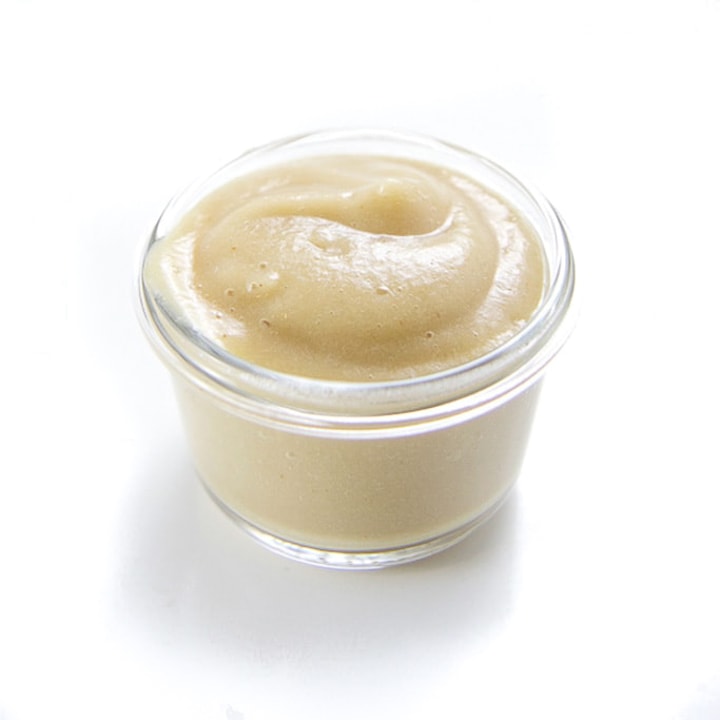
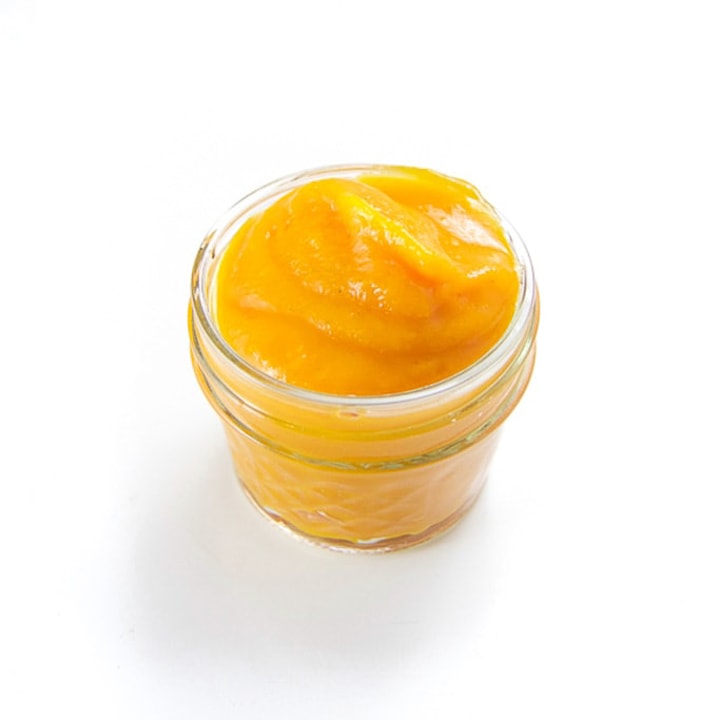
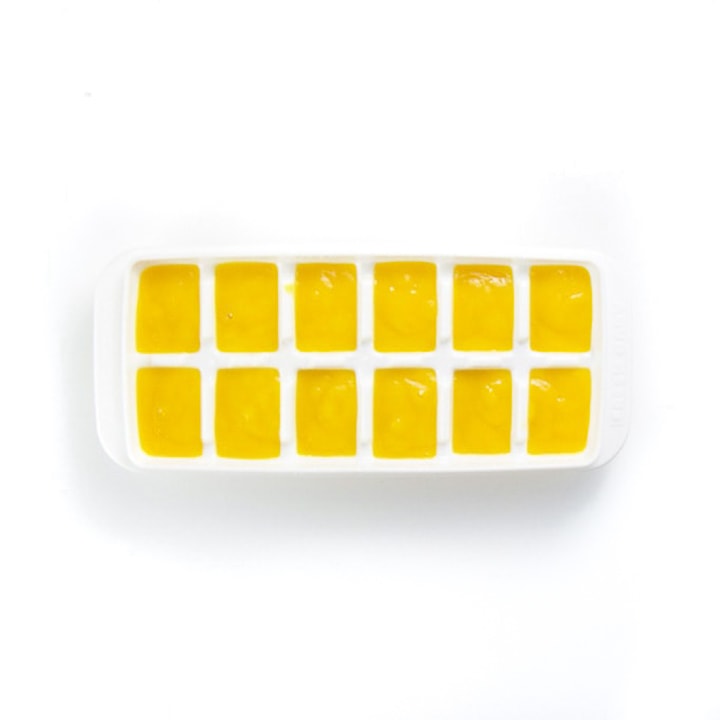
ten Starter Get-go Foods for Baby
Not sure which foods to offer first? These 10 foods are nutrient-dense, easy to make, and tasty purees are a choice for your baby.
- Avocado
- Banana
- Sweet Potatoes
- Apple
- Broccoli
- Pear
- Carrot
- Yogurt
- Oats
- Green Bean

Foods to Avoid
Y'all will desire to avert these foods until your baby is developmentally prepare for them:
- Whole basics, seeds
- Clumps of nut butter
- Stale fruit
- Hard processed
- Hard, raw fruits and veggies
- Popcorn
- Hot dogs
- Whole grapes
- Added salt and carbohydrate
- Honey until 1 year of age
- Moo-cow'due south milk until 1 twelvemonth of historic period
Sample Puree Feeding Schedule
Aim to feed baby a variety of flavors to assistance expand her palette, which can assist reduce picky eating. Attempt to brand sure you serve at least 1 iron-rich food per meal to help prevent iron deficiency anemia. To begin, serve thin pureed foods that
SAMPLE SCHEDULE FOR vi – 7 MONTH-OLDS
Virtually babies are fix to starting time purees around half dozen months of age. Start with 1-2 meals a 24-hour interval and go along the same amount of formula or breast milk feedings, usually five. Note that in that location is no one right schedule for your baby.
7am- 7:30-wake-up, bottle/breastfeed
seven:30am- eight:30am- play
eight:30am- 9am- avocado puree
9am- 10:30am- morning nap
10:30am- 11am- bottle/breastfeed
11am- 12pm-play
12pm-2pm- afternoon nap
2pm- 2:30pm-bottle/breastfeed
2:xxx- 3pm- banana puree
three- 3pm -play
4pm- 5pm- true cat nap
5pm- 5:30pm- bottle/breastfeed
5:30pm- half-dozen:xxx pm- play
six:30pm- bath
7pm-7:30pm- bottle/breastfeed
7:30pm- bedtime
SAMPLE SCHEDULE FOR 8 – 9 MONTH-OLDS
If your baby is not eating 2 solid meals a day all the same, go alee and increase purees to twice a day. Once you accept introduced a multifariousness of single-ingredient purees, you tin start offer combination purees.
7am- 7:30am- wake-up, canteen/breastfeed
7:30-8:30am- play
8:30am– 9am- apple and carrot puree
9am-10:30am- morning nap
10:30am- 11am- bottle/breastfeed
11am-12pm-play
12pm- 2pm- afternoon nap
2pm- 2:30pm- bottle/breastfeed
2:thirty- 4pm- play
4pm- 5pm- cat nap
v:00pm- 5:30pm- bottle/breastfeed
5:30pm- 6:00 pm- play
6:00pm- six:30pm- sugariness spud and chicken puree, yogurt on the side
6:30pm- bathroom
7pm- 7:30pm- bottle/breastfeed
7:30 pm-bedtime
SAMPLE SCHEDULE FOR ten – 12-Month-OLDS
By now, your baby should be getting 3 meals a twenty-four hour period, in addition to formula or breast milk, which is commonly reduced to 4 feedings per solar day. Around 9-x, your baby should exist introduced to chunky purees and so chop-chop to finger foods.
7am-vii:30am- wake up, canteen/breastfeed
7:30am-8:30am- play
eight:30am- 9am- breakfast of a quartered difficult-boiled egg, halved raspberries, whole grain pancakes
9am-10am- play
10am-12pm- morning nap
12pm- 12:30pm-bottle/breastfeed
12:30pm-1pm- play
1pm- 1:30pm- lunch of cut up broiled craven, steamed broccoli and rice
1:30pm-2:45 pm- play
ii:45pm- 3pm- snack of whole grain O'due south, cut upwardly cheese stick and sliced strawberries
3pm- 4:30pm- afternoon nap
4:30pm- 5pm- bottle/breastfeed
5pm-6pm- play
6pm- 6:30pm- dinner of ground hamburger meat, baked sweet tater sticks, steamed peas and carrots
half-dozen:30pm- bath
7pm-seven:30pm- bottle/breastfeed
7:30 pm-bedtime
Purees and Choking
Babies are less probable to gag or choke on purees compared to solid foods. When babies first suck on the chest or bottle, they are learning how to eat liquids. Transitioning to purees tin can help teach your baby an constructive swallowing technique, by propelling foods backward with the natural language and swallowing.
How to Keep Babe Safe
Every bit a parent of two, I know how scary it tin be to innovate solid foods to your baby. With the proper precautions and knowledge, the fears volition loosen and feeding your baby can become a wonderful chance for both of you.
- Always supervise with food– sit down with your baby and try not to multi-task while your baby is eating.
- Baby should exist sitting in an upright position for all meals and snacks, non reclined. If your baby starts to get sleepy during eating, remove food.
- No eating in the auto seat unless an developed is in the backseat supervising your baby.
- Practice not let baby consume on the get.Once your baby is itch or walking, avoid letting them move around with food in their mouth or property food in their hands.
- Cheque the temperature of foods earlier offering them.
- Check baby's mouth after they are washed eating. Some babies may pocket food in the sides of their cheeks or get nutrient stuck to the roof of their oral fissure as they are learning to eat. If you come across any nutrient remaining, encourage your babe to keep chewing, spit it out if they need to, or take sips of water or milk. Avoid sticking your finger in your infant'due south rima oris to become the food out – we want babe to larn how to manage taking care of the nutrient.
How to Teach Babies to Chew
When babies kickoff get-go chewing, the motility y'all see is a bones up and down jaw motion, sometimes called munching, that will eventually progress into a mature chewing pattern, called rotary chewing. Throughout this procedure, babies are likewise developing side-to-side tongue movements, chosen tongue lateralization. Tongue lateralization helps your baby push nutrient over to their gums, where the molars will eventually come in, and where the heavy piece of work of chewing happens. As your baby chews the food multiple times, it forms into a petty ball or "bolus" of food, which is so transferred to the back of the mouth for swallowing.
Purees tin can also be used to develop the skills needed for chewing. You can place a spoonful of puree to the sides of the mouth as yous would with a teether or soft piece of food. The purpose of this is not to look your infant to first "chewing" the puree in the style that we think of chewing as adults, but rather to encourage your babe to kickoff working tongue lateralization.
Ofttimes Asked Questions
How many o unces will b aby a ctually e at?
This varies with each baby and so it just depends! Some babies will only accept a sense of taste and exist washed, and others volition want more and more. Some babies have a larger ambition than others so it's hard to know merely start with one teaspoon and piece of work your way up to a tablespoon, and so more if your babe is notwithstanding interested. Infant volition consume more as they become older merely e'er pay attention to your baby'due south hunger and fullness cues to know when to stop feeding.
How many ounces of purees should baby eastat?
Past the time baby is ready for finger foods, she should exist eating around 4 ounces of food at each repast. If information technology is more or less than this, do not worry. Babies get most of their nutrition from formula or breast milk until they plough one twelvemonth old.
Does baby need teeth to eastat?
The question of how babies can chew foods without teeth makes whatever parent scratch their heads! Only in reality, nosotros all chew food with our back molars, not our front teeth, which baby doesn't go until 18-22 months of age. Practiced matter babies have super tough and strong gums, which they use to mash, gnaw and chew foods. Baby's gums are amend at chewing food than yous would think, and your baby will be able to chew more foods the older they get, even without their molars.
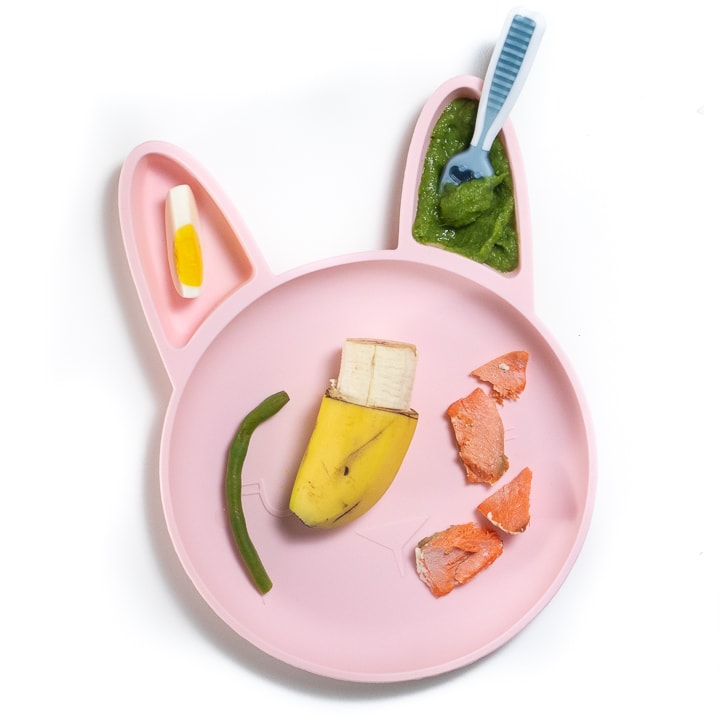
Tin you mix baby-bed weaning and purees?
Absolutely! Both purees and solid foods are great ways to introduce your babe to new flavors and textures. Babies actually learn to swallow liquids outset, whether in the course of breastmilk or bottles. Purees are similar to offer liquid that'south been thickened a bit, so this can assist with introducing your baby to a texture modify and getting practice with swallowing solid food. Just consider limiting the amount of times y'all switch back and forth betwixt soft solids and purees during each repast, at least when your baby is first learning to swallow. Instead, you lot could offering a veggie puree as the "appetizer" before soft solids at ane meal, or yogurt equally the "dessert" at another meal.
Puree Feeding Tips
- Relax: attempt to relax and don't worry too much about how much baby eats. It should exist fun for you and baby.
- Timing: babies tend to tolerate purees best 1 60 minutes breastfeeding or canteen, when they aren't also hungry or too total.
- Limit distractions: turn off screens, put abroad toys, and sit down down face to face with baby during the meal.
- Follow baby'southward atomic number 82: it tin can be easy to overfeed when using traditional weaning vs baby led weaning, so always follow baby's cues for when they are done eating. Turning away from the spoon, closing his mouth, or pushing food abroad are all signs that babe is finished with the meal.
- Start with a pocket-sized amount: and small servings. ane-2 oz of food per meal is adequate. Remember, these servings will exist smaller than you retrieve and at this stage, breast milk or formula will still be your infant'southward master source of calories and diet.
- Offering the spoon and allow waiting time: after yous bring the spoon toward baby's mouth, wait for her to open and accept it. Allow baby to close her top lip and suck puree off the spoon, while y'all guide the spoon directly out of the mouth. Avoid scraping the spoon on the roof of the rima oris as you lot bring it back.
- Utilise shallow spoons or flat spoons: these help infant with clearing puree off with the acme lip. A couple options nosotros beloved include Olababy and ezpz mini spoon.
- Give time to practice: at first you might observe baby pushing the nutrient back out and then swallowing. With time and practice, this frontward/backward reflexive motion with the tongue will fade and babe will start swallowing more than food than he pushes back out.
- Have a dorsum spoon (or two!): even very young babies may want to be involved in the process as much as possible. Giving babe an extra spoon to hold tin be helpful in giving babe sense of control and promoting hand-heart coordination.
- Let infant become messy! Encourage touching and playing with purees for a full sensory experience.
Or sentry a shortened version of this video here.
Make Baby Food
-
Make baby food puree per the recipe. This could exist by steaming, roasting or sauteing.
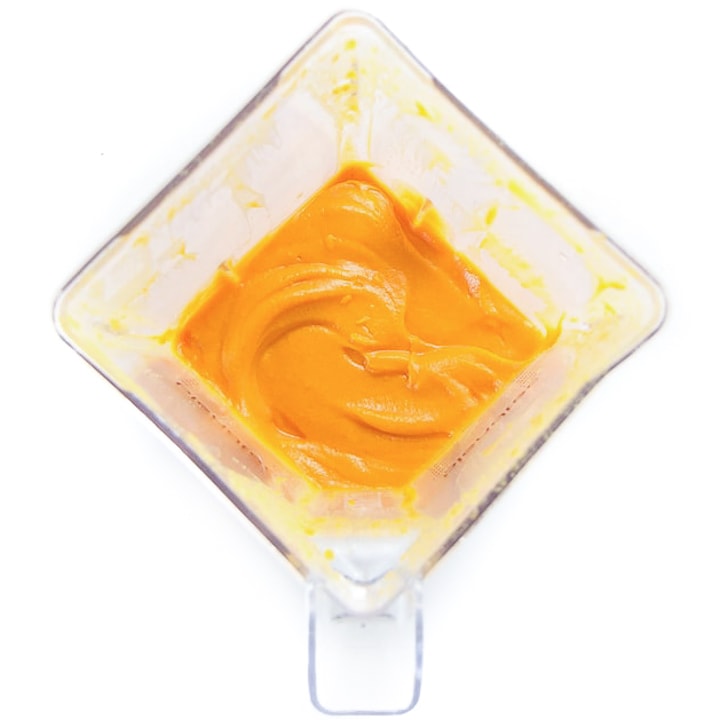
Freeze Purees
-
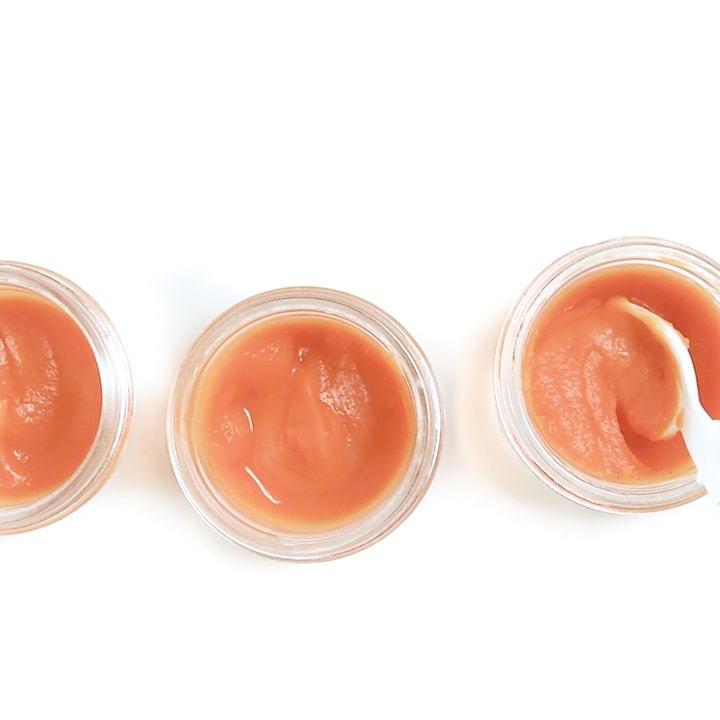
Cascade puree into freezer tray or pocket-sized baby food jars.
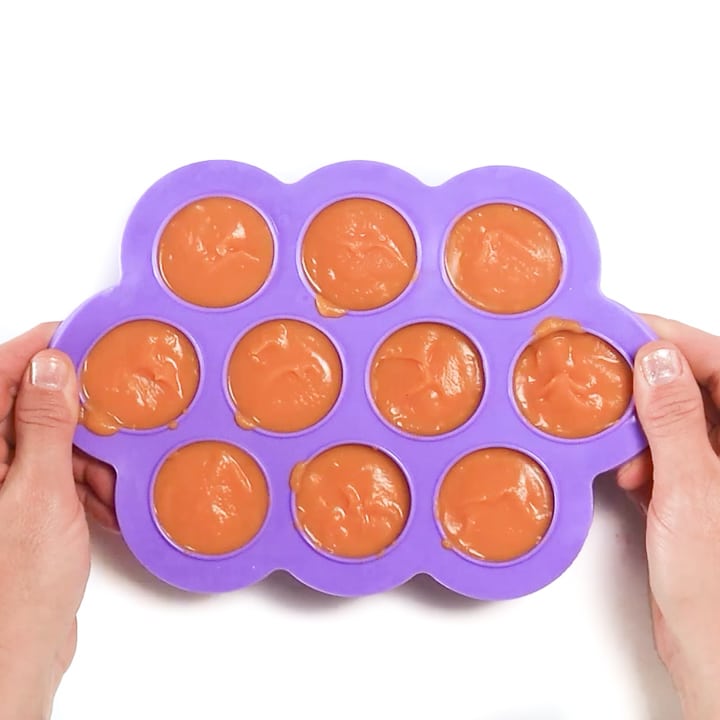
-
Lable the freezer tray or baby nutrient jars with the recipe proper noun and appointment.
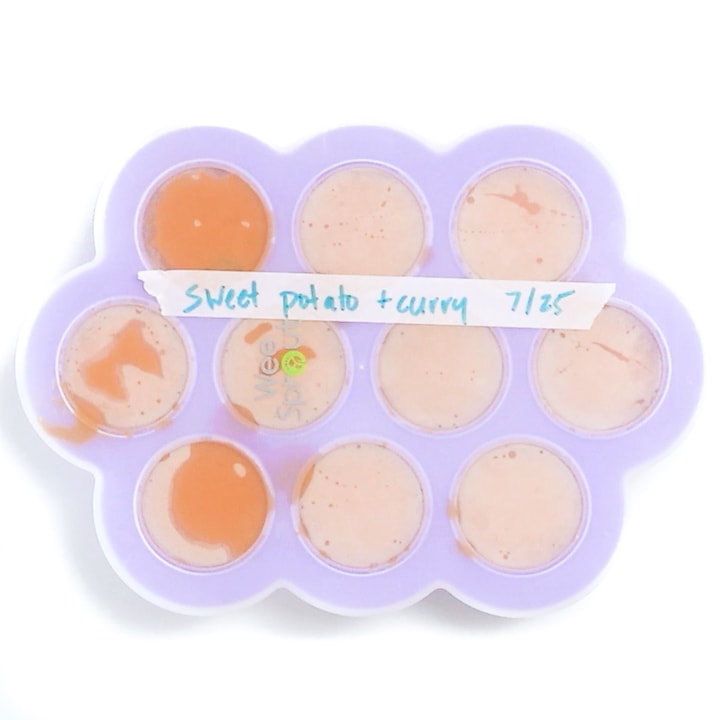
-
Place the tray or jars in the freezer and freeze for at least five hours.
-
Pop the frozen baby food cubes out and place them into a zilch-lock baggie or stasher bag.
Thaw Baby Food
-
Microwave –
Accept the frozen puree cubes that you want to serve out of your freezer. Place them in a glass microwave-safe container. Microwave in 20-second increments, stirring every time The puree is ready when it is only warm to your affect. Grab two clean spoons, i for you and one for your baby, and examination your puree before serving.
-
Fridge –
Take the frozen puree cubes you desire to serve out of your freezer. Identify the cubes in an air-tight glass container. Place the container in the refrigerator and let thaw for 12 to 16 hours. Do not leave the puree in the container to thaw on the counter or anywhere out of the fridge, as bacteria will commencement to grow at a rapid rate – which is definitely not skillful. The puree will be cold just thawed, and so if your baby likes her puree warmed, you lot'll have to stop the job using the microwave or stovetop method.
-
Stovetop –
In a small saucepan, add together the frozen puree cubes you want to serve to baby. Over medium-depression oestrus, gently cook the puree until warm, stirring occasionally.
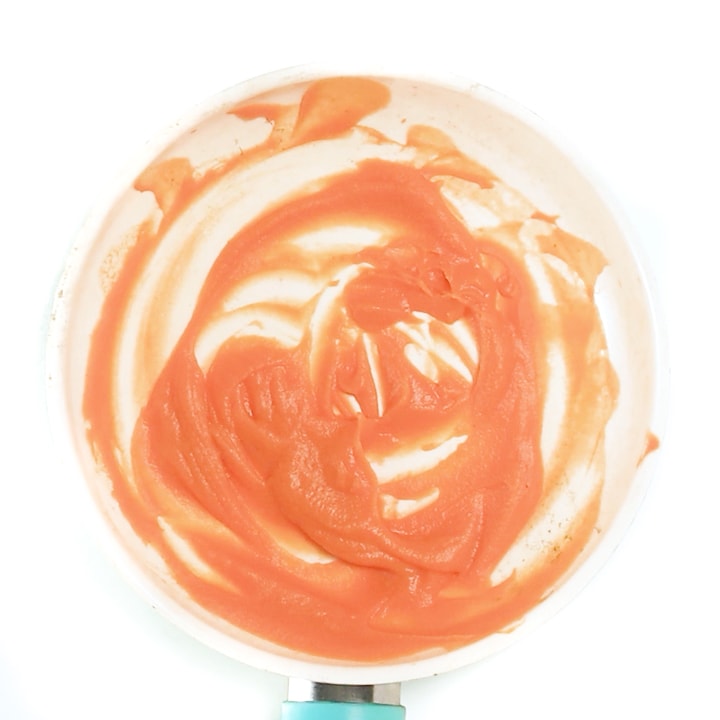
-
Serve and relish!
Are There Any Vegetables to Be Careful of When Pureeing My Own Baby Food
Source: https://babyfoode.com/blog/ultimate-guide-on-how-to-make-and-serve-homemade-baby-food-without-stressing-out-about-it/
0 Response to "Are There Any Vegetables to Be Careful of When Pureeing My Own Baby Food"
Post a Comment